

When is the Best Time to Get on the Property Ladder?
The simple answer is, as soon as possible.
Property Prices Always Increase
While there have been some periods where house prices in the UK have stagnated or even dipped a little, as a general rule of thumb, property prices will always increase. Therefore, the earlier you are able to invest in a property, the more money you are likely to make off it (or the more money you’ll save buying it earlier).
Understanding House Prices through Statistics
The best way to understand house prices and the way that they have changed throughout the decades is by looking at the statistics. Facts and figures never lie. We’ve put together this handy infographic to help you easily see where and when house prices have increased and what the difference is now, in comparison to back in the 50s.
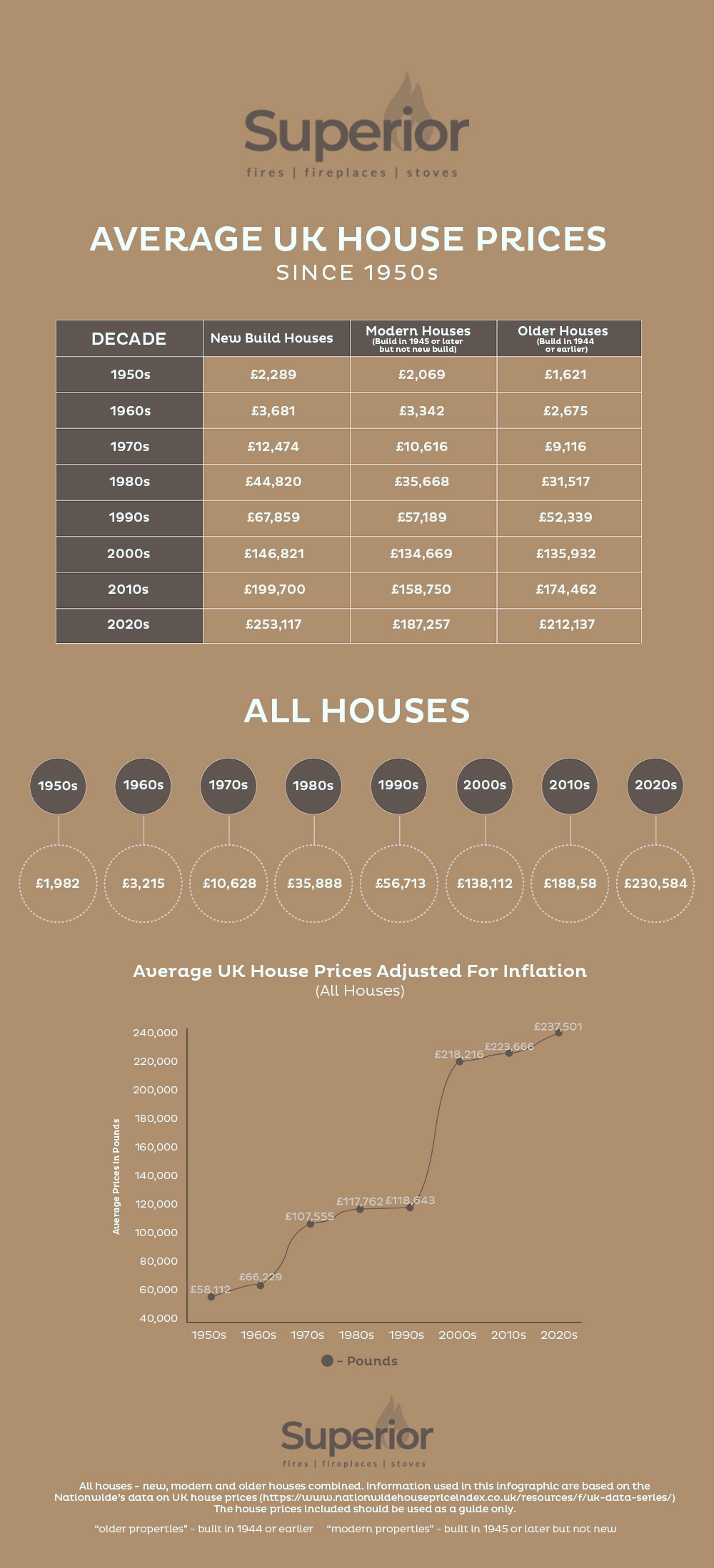
As you can see from the graphic, in the 1950s you could actually own a house for just one or two thousand pounds. These days that wouldn’t even be enough for a deposit, but decades ago, you could buy an entire home for this. Now, of course, what we need to factor in as well is the general earnings at this time. In the 1950s, the average wage of a person working in the UK was £7.08 (according to thismoney.co.uk), in today’s money, this £7.08 would be £499. So when we look at the amount people were earning back then, it makes sense that the property value was so low; otherwise, nobody would have been able to afford to buy. Looking at it this way, the property price back in the 50s was approximately 4 years’ worth of annual earnings.
Fluctuations in House Prices
A decade later, the price of properties had almost doubled, and the following decade the prices of houses more than doubled so that by the 70s a property was costing closer to £10,000, which is five times higher than it was in the 50s. As you can see, the increase in house prices isn’t an exact science. It won’t go up by the same amount each year, and the economic climate will impact how much they increase by.
Significant Increases in House Prices
By the 1980s, typical house prices were in excess of £30,000. In one decade, the prices of houses tripled, which is a massive increase. Most people in the 80s were probably kicking themselves for not buying sooner. But this hasn’t actually been the biggest increase we’ve seen. Actually, the biggest increase we’ve seen historically is between 1990 and 2000, where average house prices jumped from £56,000 to £138,000. Take a look at the graph on the infographic, and you’ll easily be able to see this massive and steep incline in prices.
House Prices in the 2020s and Beyond
Now, in the decade of the 2020s, 7 decades after the 1950s, house prices have increased to an average of £230,000, well over a 100% increase in price, and that’s just in 7 decades. Imagine where house prices will be in another decade or two.
Make the Decision Sooner Rather Than Later
Making that decision to get onto the property ladder is one that most people really consider and don’t rush into, which they shouldn’t, after all, it is an investment. But as you can see, the longer you take to buy a property, the more you drag your feet, the more you are likely to have to pay for the property. So with this in mind, if you are considering investing in property, we strongly recommend you do it as soon as you are financially able too.Then you can sit back in front of your fireplace, relax and enjoy the rise in house prices knowing you’re profit margin is only growing.